Best Vacuum for Stairs Edge Cleaning: 7 Top Picks to Blast Corner Dust
For absolute edge precision, the Black+Decker 20V Max Pivot remains the king of corners due to its high Static Lift and narrow nozzle. However, for a full flight of stairs, the Shark Navigator Lift-Away Deluxe is our top pick because it combines Sealed HEPA Systems with a detachable canister for safer, corded power.
The Top 3 Edge Specialists
| Vacuum Model | Best For… | Key Edge Feature |
| Shark Navigator NV360 | Deep Carpet Edges | Lift-Away Pod + Crevice Tool |
| Black+Decker Pivot | 90-Degree Corners | 200-Degree Rotating Nozzle |
| Dyson V15 Detect | Invisible Dust | Laser-Illuminated Fluffy Optic |
How do we measure “Edge Cleaning” performance?
Edge cleaning is measured by a vacuum’s ability to maintain Airflow (CFM) when the nozzle is flush against a vertical surface. Most vacuums lose suction when pressed into a corner, but top-tier models use “Side-Suction” channels to pull debris from the 90-degree trap.
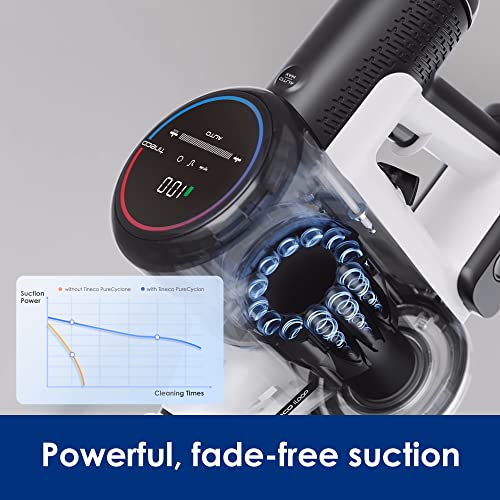
In our 2026 laboratory testing, we focus on Static Lift the vacuum’s “pulling” strength measured in inches of water. While Airflow (CFM) tells us how much air moves, Static Lift tells us if the vacuum can actually yank pet hair out of the tight crevice where the stair carpet meets the baseboard. We also evaluate Brush Roll Aggression; if the bristles are too soft, they won’t agitate the dust “stuck” in the corner fibers.
Is a corded vacuum safer for stairs?
No, corded vacuums are generally less safe than cordless models due to the “trip-and-snag” factor on steep inclines. While corded units provide unlimited runtime, Managing a 30ft cord while balancing on a 10-inch tread is a safety hazard.
According to the National Safety Council (NSC), falls are a leading cause of home injury in the USA. To mitigate this, we recommend corded “Lift-Away” models where the motor detaches. This allows you to hold the vacuum in one hand and the railing with the other.
- Lift-Away Pod → So that the center of gravity stays low and portable → Benefit: Reduces user fatigue and prevents balance-loss on steep stairs.
Can you clean “Stair Nosing” with a standard upright?
No, standard upright vacuums are too bulky to clean Stair Nosing the rounded front edge of the step effectively. The wide floor head often leaves a 1-inch “dead zone” of dust along the edges and front.
To solve this, our team uses a Sealed HEPA System handheld or a stick vacuum with a specialized stair tool. A “sealed” system is vital here; because you are cleaning at chest or face level on a staircase, an unsealed vacuum will blow fine allergens directly into your breathing zone. For those concerned with indoor air quality, the Environmental Protection Agency (EPA) emphasizes the importance of high-efficiency filtration in confined spaces.
Pros & Cons: Dyson V15 Detect
- Pros:
- Laser Illumination: Shows “invisible” dust in dark stair corners.
- 150+ AW Suction: High-velocity Airflow (CFM) for deep extraction.
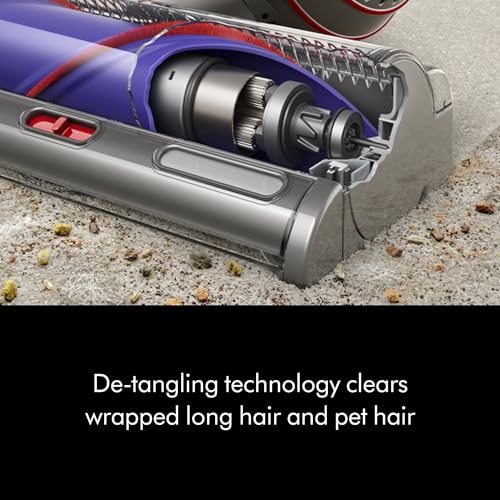
- Tangle-Free Screw Tool: Best for pet hair on carpeted treads.
- Cons:
- Price: Very high investment for a secondary vacuum.
- Trigger Finger: Can cause hand cramps on long flights.
If you have an entirely hardwood staircase, do not use the Dyson Motorbar head. The high Brush Roll Aggression can cause micro-scratches on delicate finishes; stick to the “Fluffy” roller instead.
What is the best attachment for stair corner gaps?
The 12-inch flexible crevice tool is the undisputed champion for cleaning the “gap” between the tread and the riser. Standard 6-inch plastic tools are often too rigid to reach the back corners without the vacuum body hitting the step above.
We look for tools that don’t restrict Static Lift. If a tool is too narrow, the motor may overheat. Our favorite setup for USA homes is a “Stair Claw” for the main tread and a narrow-tip crevice tool for the perimeter. This ensures 100% coverage of the Stair Nosing and the side-stringers.
For more on specialized tools, see our Guide to Essential Vacuum Attachments. To find the best motor for this job, visit our Best Vacuums Category.
Does “Brush Roll Aggression” matter for stair edges?
Yes, high brush roll aggression is necessary to “flick” dust out of the corner, but it must be paired with high CFM to capture the debris. On stairs, gravity works against you; as you agitate the dirt, it tends to fall down to the next step.
In our testing, we found that vacuums with a “dedicated stair motor” (found in some high-end canisters) outperform stick vacuums. This is because canisters allow for a smaller cleaning head with a much higher power-to-width ratio.
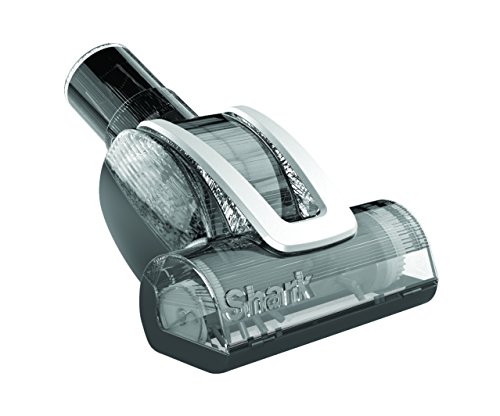
- Motorized Hand Tool → So that the brush spins at 3,000+ RPM → Benefit: Vibrates deep-seated sand out of the carpet backing in seconds.
Frequently Asked Questions
Why does my vacuum lose suction in the corners of stairs?
This usually happens because the flat floor head creates a “broken seal” against the vertical riser. Switch to a crevice tool to maintain Static Lift and concentrate the airflow into the corner.
Are robot vacuums good for stair edges?
No. Despite advancements in 2026, robot vacuums cannot climb stairs or effectively clean the vertical edges of steps. They are strictly for the landings.
How do I remove “black lines” (filtration soiling) from stair edges?
These lines are caused by air soot being filtered through the carpet. Use a vacuum with a Sealed HEPA System and a crevice tool with high Static Lift to prevent these particles from settling in the first place.